Charter Guidance | October 15, 2026
How to Budget a BVI Yacht Charter: A Financial Playbook
Planning a private crewed yacht charter in the British Virgin Islands (BVI) is one of the most extraordinary ways to gather family or close friends for an unforgettable getaway. However, when navigating charter pricing online, even experienced travelers can find it challenging to parse all-inclusive rates vs. plus-expenses rate structures, crew gratuity benchmarks, destination logistics, and out-of-pocket expenses.
To provide complete financial clarity and help you plan with absolute confidence, our team has broken down your charter investment into Six Core Financial Pillars:
- 1. Base Charter Rates
- 2. Customary Crew Gratuities
- 3. Round Trip Travel
- 4. Taxes & Advance Provisioning Allowance (APA)
- 5. On-Island Incidentals & Cash
- 6. Trip Insurance
Whether you are planning a multi-family celebration or a getaway with close couples, this financial playbook provides actionable budgeting advice, travel timing rules, and real-world cost scenarios across our fleet.
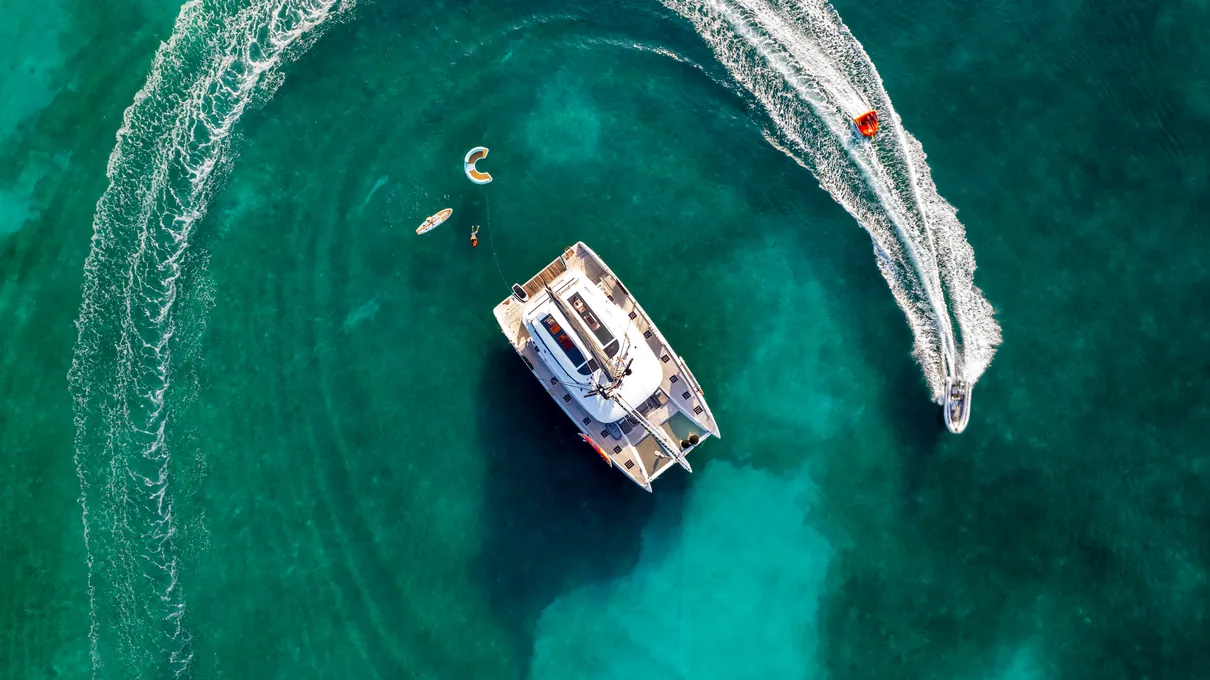
Table of Contents
- Pillar 1 – Base Charter Rates and The Three Fleet Pricing Tiers
- Pillar 2 – Customary Crew Gratuity: Industry Benchmarks & Tipping Etiquette
- Pillar 3 – Round Trip Travel: Flight Routes, Island Transfers & Return Buffer Rules
- Pillar 4 – Destination Taxes & Advance Provisioning Allowance (APA)
- Pillar 5 – Payment Timelines, On-Island Incidentals & Cash
- Pillar 6 – Trip Insurance: Cancellation Policies, Hurricane Season & Coverage Costs
- Group Cost-Sharing Math: Equal-Equity & Multi-Family Strategies
- Real-World Budget Scenarios: Boutique, Premier & Luxury Tier Examples
- Conclusion: Crafting Your Perfect BVI Charter Vacation
Pillar 1 – Base Charter Rates & The Three Fleet Pricing Tiers
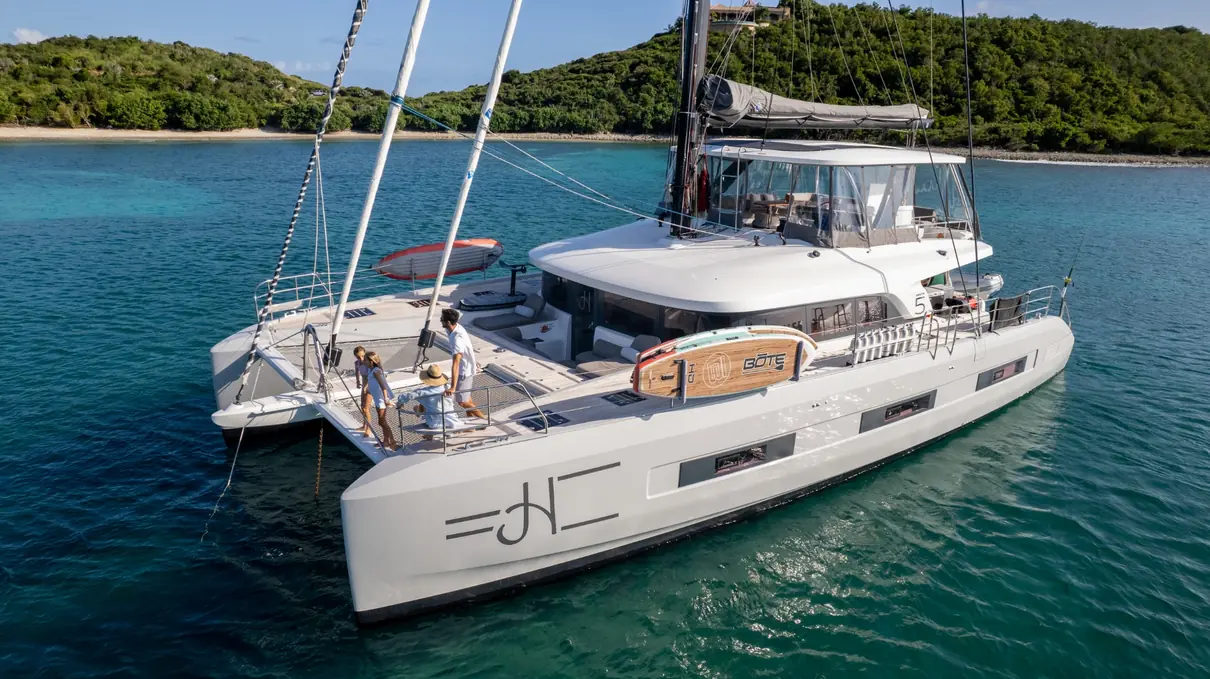
When booking a crewed catamaran charter in the BVI, the foundational component of your budget is the base charter fee. Base prices range from $25,000 / week on the lower end of our Boutique Tier to over $125,000 / week on our Luxury Tier, depending on vessel length, yacht age, crew size and more. You can read more about our base charter fee on our BVI & Caribbean Yacht Charter Rates Guide.
Our Three Fleet Pricing Tiers
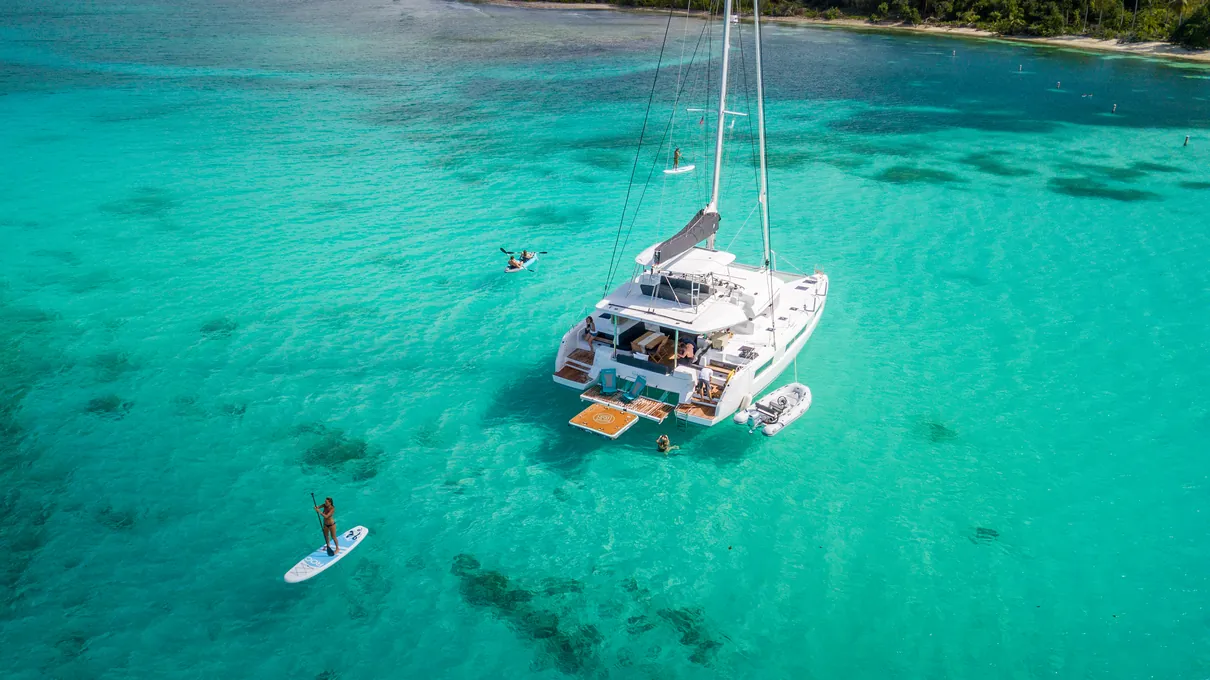
To help you find the right balance between vessel length, yacht age, crew size, and budget, Carefree Yacht Charters categorizes vessels into three distinct tiers:
- Boutique Tier ($25,000 to $45,000 / week): Classic, impeccably maintained crewed catamarans (typically 45′ to 55′) operated by a talented 2-person crew (Captain & Chef). Ideal for single families, two-family groups, or close couples seeking exceptional value and five-star hospitality.
- Premier Tier ($45,000 to $65,000 / week): Modern sailing and power catamarans (typically 55′ to 65′) featuring expansive flybridge lounges, hydraulic swim platforms, flexible cabin configurations (master suites or equal queens), expanded water sports equipment, and heightened service from 2 to 3 crew members.
- Luxury Tier ($65,000 to $125,000+ / week): Flagship catamarans and mega-yachts (60′ to 80’+) offering ultra-luxury finishings, five-star culinary programs, expanded crews of 3 to 4+ maritime professionals, premium water toys (such as e-foils and sea bobs), and maximum square footage.
For detailed, guest-by-guest rate tables and full fleet breakdowns across all three tiers, explore our primary BVI & Caribbean Yacht Charter Costs Guide.
Pillar 2 – Customary Crew Gratuity
On an all-inclusive crewed charter, your Captain and Chef (along with First Mates or Stewardesses on larger Premier and Luxury vessels) work tirelessly around the clock—serving as your captain, private chef, bartender, snorkel guide or dive master, tour guide, and concierge.
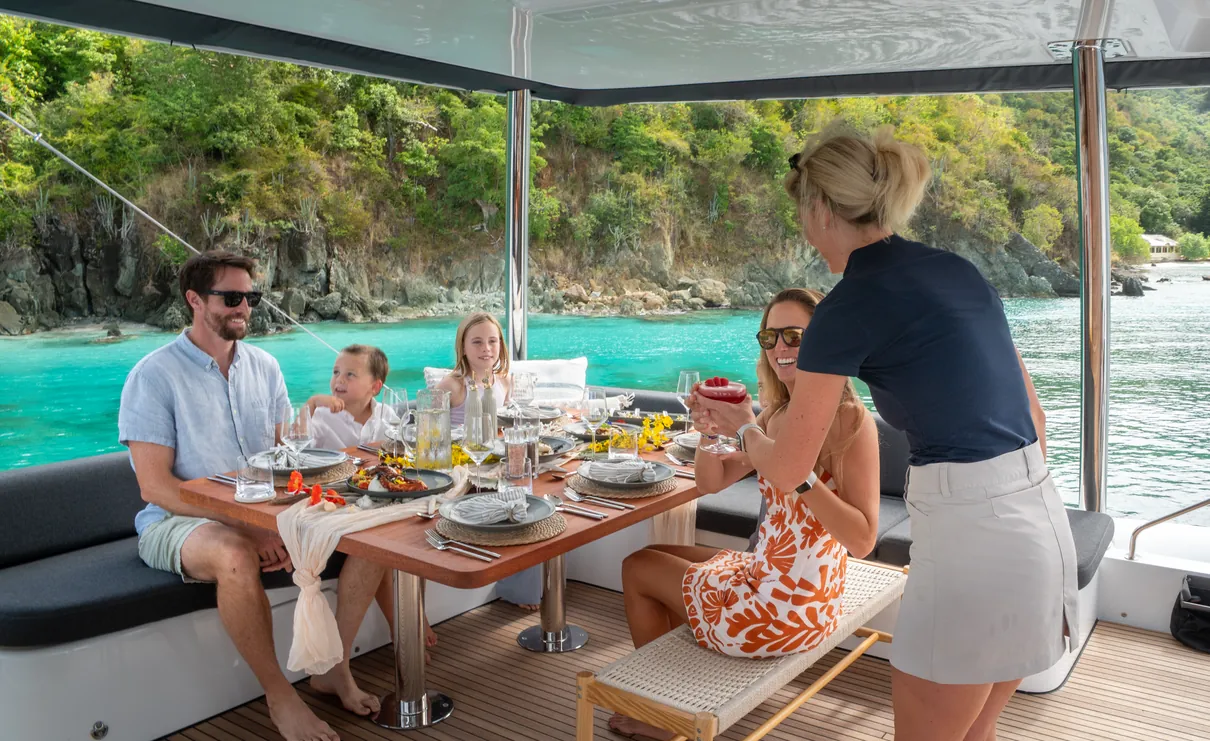
While crew gratuity is discretionary and based on performance, it is standard industry practice across the BVI and Caribbean.
- Industry Benchmark: Gratuities range from 15% to 20% of the base charter fee.
- Budget Planning Benchmark: We strongly recommend budgeting 20% for excellent service, which is the industry standard expectation for a job well done.
- How It Is Shared: Gratuities are presented to the Captain at the conclusion of your charter and divided equally among all crew members.
For a deep dive into what your crew does behind the scenes, bank wire transfer mechanics, and final-morning etiquette, read our complete Ultimate Crewed Yacht Charter Tipping Guide.
Carefree Insider Tip: Tipping Etiquette & Payment Options
You do not need to carry thousands of dollars in physical cash through airports to tip your crew. Most Captains accept pre-arranged bank wire transfers sent prior to disembarkation, or in some cases other digital options (such as Zelle or Venmo).
Pro Tip: Even if you pay the gratuity electronically, handing a written thank-you card to the Captain on your final morning is a warm, traditional gesture that crews deeply appreciate.
Pillar 3 – Round Trip Travel: Arrival & Departure Logistics
Navigating round-trip travel for a British Virgin Islands charter requires a complete look at both arrival and departure logistics. Planning both ends of your journey upfront ensures a smooth transition onto your yacht and a stress-free return home.
Part 1: Arrival Logistics & Inbound Flight Routes
When planning your group’s inbound travel to the region, you have three primary flight and transfer routes:
1. Direct Non-Stop Flights to Tortola / Beef Island (EIS)
- The Route: Fly non-stop directly into Terrance B. Lettsome International Airport (EIS) on Tortola via American Airlines (the exclusive airline currently offering direct non-stop service to EIS, flying out of Miami).
- The Advantage: Ultimate ease and speed. You land directly in the BVI, clear customs at the airport, and can take a 20-to-45-minute land taxi directly to your yacht’s marina (depending on your yacht’s starting location).
- Cost Benchmark: Mainline airfare carries a premium compared to St. Thomas, but you completely eliminate inter-island ferries, water taxis, and international sea port fees.
2. Flying into St. Thomas, USVI (STT)
- The Route: Fly into Cyril E. King Airport (STT) in St. Thomas, USVI (which often offers lower airfare and numerous direct flights from major US hubs), then transfer across the water to Tortola.
- Inter-Island Transfer Options:
- Commercial Ferry (~$150 per person round-trip): An all-in estimated price that bundles in mandatory BVI customs, environmental, and port fees. Transit times vary between 30 to 60 minutes depending on the route across the channel.
- Private Water Taxi (~$500 per person round-trip): An all-in estimated price offering seamless VIP service, flexible schedules tailored to your flight, luggage assistance, onboard beverages, and expedited customs clearance.
3. Connecting or Charter Flights to Tortola (EIS) via San Juan (SJU)
- The Route: Fly into Luis Muñoz Marín International Airport in San Juan, Puerto Rico (SJU) from your home airport, then take a short regional connecting flight with Cape Air or a luxury scheduled/private charter flight with Tradewind Aviation directly into EIS on Tortola.
- The Advantage: Broader mainline flight choices into San Juan while ensuring reliable, high-end connections directly onto Tortola without needing a sea transfer across the channel.
- Cost Benchmark: Often offers a great middle ground on airfare costs, avoiding ferry fees while getting you straight onto Tortola.
Part 2: Departure Logistics & Return Travel Rules
- 5-Hour Buffer Rule for St. Thomas (STT) Departures: Regardless of whether you return to St. Thomas via commercial ferry or private water taxi, always allow at least 5 hours measured from the time the ferry or water taxi departs the BVI to the time your outbound flight departs St. Thomas.
- St. Thomas Outbound Flight Timing: We recommend booking departure flights from St. Thomas no earlier than 3:00 PM. This accounts for sea transit, BVI outbound customs, US Customs entry, airport transfer, and security lines without rushing your final morning. If guests wish to book an earlier departure flight from St. Thomas, a private water taxi back to St. Thomas is strongly recommended to accommodate the tighter schedule.
- Tortola (EIS) Departures: For flights leaving directly from Beef Island/Tortola, a standard 2-hour airport arrival window is sufficient, allowing for maximum relaxation on your last day aboard. While mid-afternoon departures are ideal for maximum relaxation, flights departing at Noon or later still allow you to enjoy your final evening anchored at one of the outer islands in the BVI as well as a more relaxed morning aboard.
Carefree Insider Tip: VIP Direct Yacht Rendezvous Across All Tiers
For clients flying into St. Thomas seeking maximum convenience, a private water taxi rendezvous can be arranged across all fleet tiers. A private water taxi meets your group in St. Thomas and brings you directly to your yacht at an outer island anchorage on Day 1, allowing you to step aboard in a stunning BVI bay. Please note that a Day 1 anchorage rendezvous requires an afternoon flight arrival and pre approval from the yacht crew to properly align the vessel’s transition. Upon departure, the water taxi meets your vessel at your final anchorage and whisks you back to St. Thomas, where a land taxi is waiting to take you straight to the airport for seamless door-to-door transit.
Pillar 4 – Destination Taxes & Advance Provisioning Allowance (APA)
Where you cruise impacts your bottom line, but one of the BVI’s greatest advantages is all-inclusive pricing simplicity:
- British Virgin Islands (BVI): Standard BVI cruising permits, national park fees, and local marine taxes are built directly into your all-inclusive base rate.
- Other Caribbean Destinations (Bahamas, St. Maarten, Grenadines): If chartering outside the BVI, localized government taxes (such as the Bahamas’ mandatory 4% government tax + 10% VAT) or regional cruising permits apply separately.
- Plus-Expenses Charters & The APA: While the vast majority of our catamarans operate on an all-inclusive basis, select luxury catamarans and elite motor yachts operate on a plus-expenses rate structure. On these charters, an Advance Provisioning Allowance (APA)—typically 35% of the base charter rate—is paid upfront along with the final payment. The Captain uses this fund to cover fuel, gourmet provisioning, fine wine, other special requests, and dockage, tracking every receipt with any unspent funds refunded at the end of your week.
Carefree Insider Tip: The 1.55 All-In Multiplier
If considering a plus-expenses yacht, use our simple 1.55 multiplier to estimate your total all-in vacation budget before flights:
Base Charter Fee × 1.55 = Total Out-of-Pocket Estimate
(This accounts for the 35% APA deposit + 20% customary crew gratuity.)
Pillar 5 – Payment Timelines, On-Island Incidentals & Cash
To help you manage cash flow leading up to your vacation, charter payments follow a predictable schedule based on how far in advance you reserve your yacht:
The Deposit & Payment Schedule
Early Booking Advantage (7+ Months in Advance): Spread your investment into three flexible payments:
- 25% Initial Deposit: Paid upon booking to lock in your preferred yacht, crew, and exact dates.
- 25% Second Deposit: Due 6.5 months prior to charter start date.
- 50% Final Balance: Due 45 days prior to embarkation (along with any destination taxes, APA or optional add-ons like sleep-aboards).
Standard Booking (Within 7 Months of Charter):
- 50% Initial Deposit: Paid upon booking to secure your yacht.
- 50% Final Balance: Due 45 days prior to embarkation (along with any destination taxes, APA or optional add-ons like sleep-aboards).
Last-Minute Booking (Within 45 Days of Charter):
- 100% Full Balance: Due immediately upon booking to secure your yacht, crew, and dates.
Carefree Insider Tip: Locking in Peak Dates Early
Flagship catamarans and popular crew teams often book 8 to 12 months in advance or earlier for holiday weeks, spring break weeks, or other popular dates within prime winter months. Taking advantage of our 25% early booking deposit allows you to reserve top yachts early with a lower upfront commitment, keeping your initial cash outlay manageable while securing prime dates.
How Much Physical Cash Should You Bring?
While major credit cards—specifically Visa and MasterCard, which are widely accepted across the islands—can be used at larger resorts and popular beach bars, physical U.S. currency remains king for island taxis, remote beach bars, and local vendors across the BVI.
Because on-island expenses vary between adults and children, we recommend structuring your physical cash cushion by guest type:
- Adults / Couples: $500 per adult (or $1,000 per couple).
- Children: $150 to $200 per child
- Family Benchmark (Family of 4): Roughly $1,200 to $1,400 total physical cash for the entire week.
What Your Physical Cash Covers:
- Mandatory Port Fees: If arriving via commercial ferry from St. Thomas, expect mandatory customs/environmental port fees of $40 per person in physical cash (included in water taxi quotes).
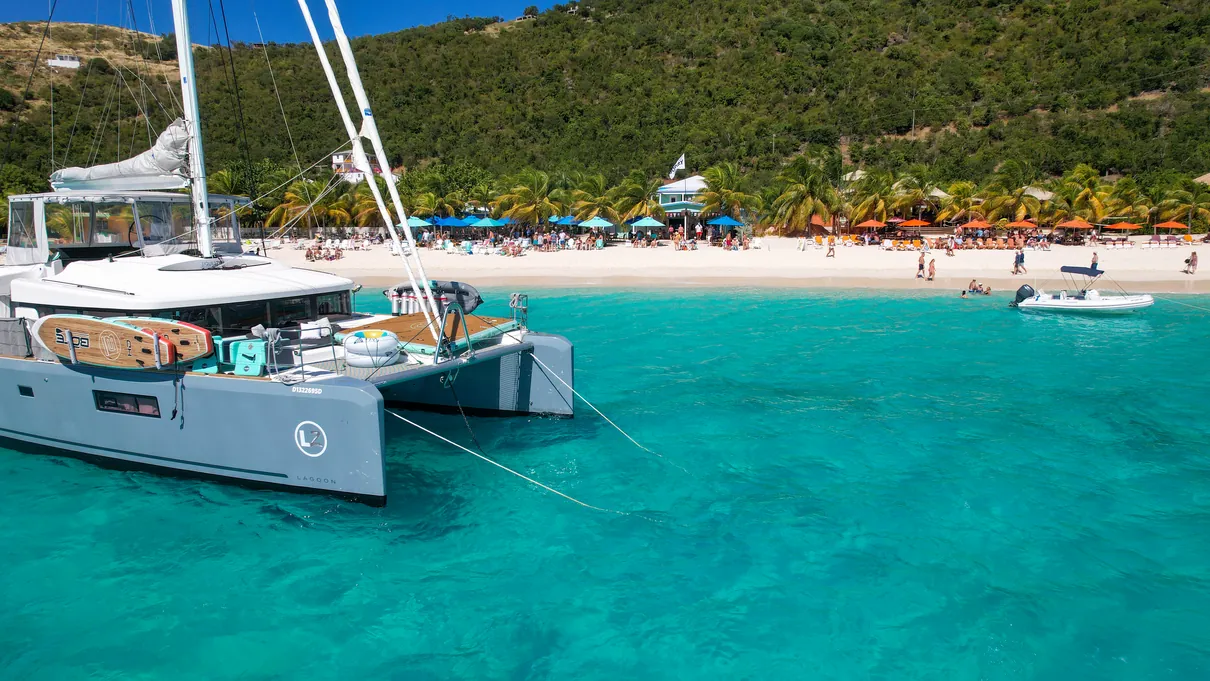
- Beach Bars & Island Incidentals: Honoring the famous origin of “soggy dollars” at spots like the iconic Soggy Dollar Bar, afternoon or sunset cocktails at more remote beach bars, shoreside land taxis, local island crafts or souvenirs, and sweet treats or pirate swag for the kids.
Pillar 6 – Trip Insurance
Protecting your vacation investment is an essential step when planning a major trip months in advance.
Cancellation Policy: Under standard industry charter contracts, deposits are non-refundable. However, if you must cancel and the yacht successfully rebooks your exact dates, your deposits are returned minus a 20% cancellation fee based on the total charter cost.
Trip Insurance: We strongly recommend securing comprehensive trip insurance year-round, and especially if you are traveling during hurricane season (June 1 through November 30).
Trip Insurance Costs: High-quality trip insurance plans typically cost between 5% and 7% of your base charter fee and provide complete financial peace of mind for unexpected travel interruptions or medical emergencies.
Carefree Insider Tip: Choosing the Right Trip Insurance
While you are free to choose any trip insurance provider, our clients receive a curated shortlist of specialized insurance providers with a proven history and working knowledge of maritime charter agreements.
Smart Luxury: How Group Cost-Sharing Maximizes Charter Value
Understanding how group cost-sharing works provides complete financial clarity while showing you how to maximize the value of your BVI charter investment.
Group Dynamics: How Group Size Affects Cost and Value
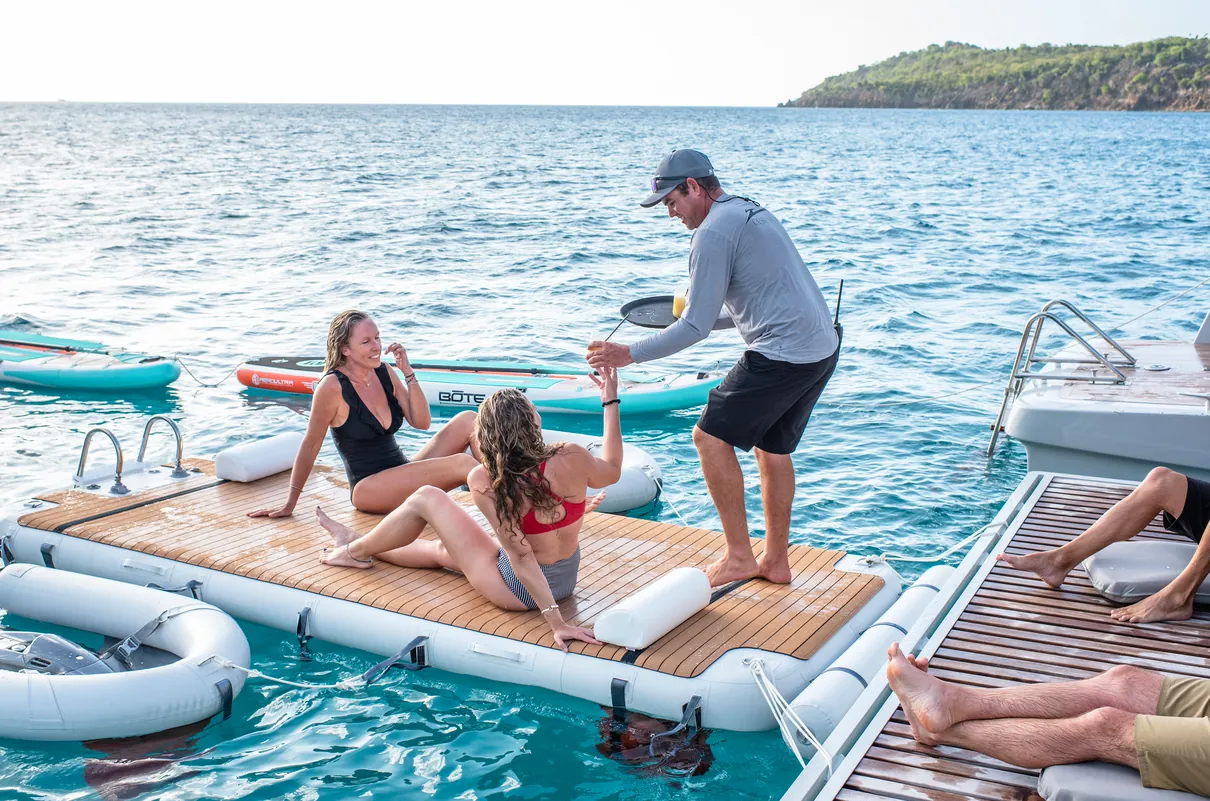
One of the greatest financial advantages of a private yacht charter is how cost-sharing works across groups. Unlike luxury resorts or cruise lines that charge per person or per room, chartering a crewed catamaran becomes dramatically more cost-effective as you fill the available guest cabins.
The Equal-Equity Rule for Couples
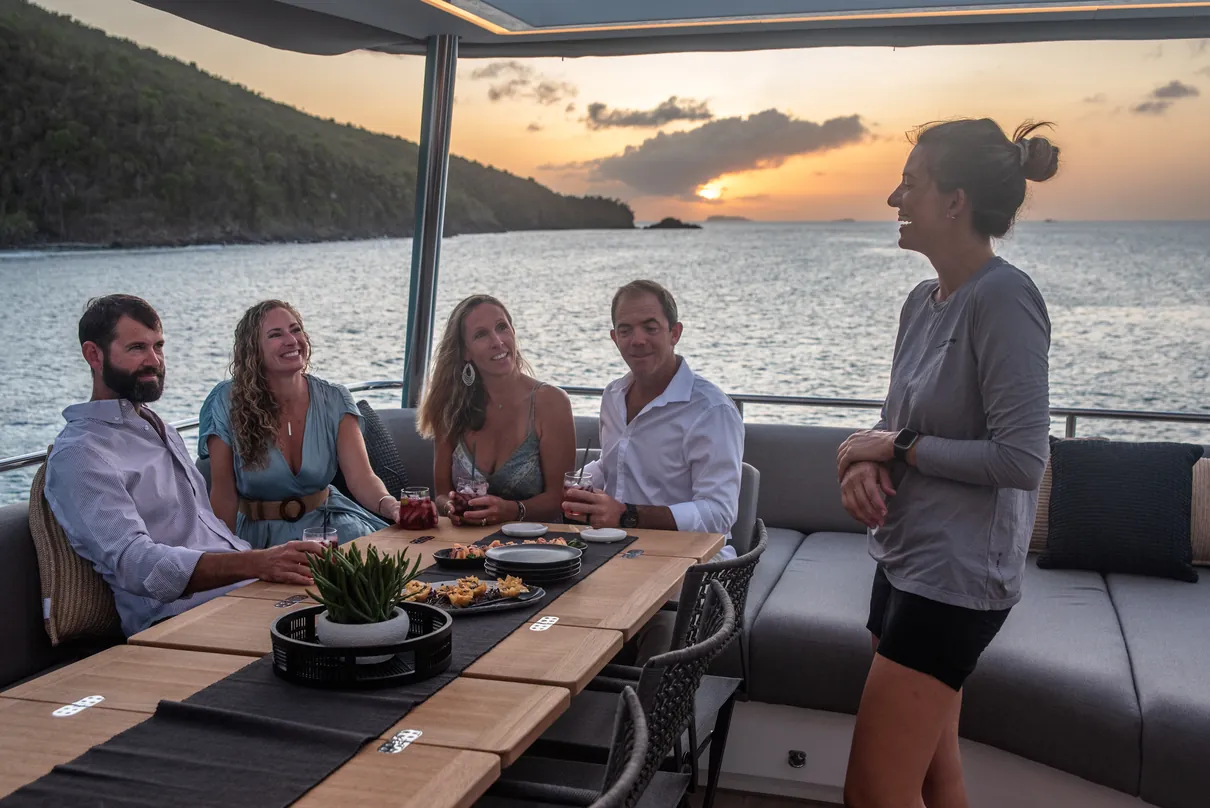
When chartering with three or four couples, prioritize Premier or Luxury catamarans configured with identical Queen or King en suite staterooms. Ensuring every couple enjoys identical accommodations keeps cost-splitting simple, equitable, and completely stress-free.
Additionally, filling all available cabins allows couples to collectively step up to Premier or Luxury fleet tiers, unlocking enhanced amenities, expanded living space, and significantly greater overall value per couple. To explore some of our favorite equal-stateroom layouts for friends traveling together, visit our BVI Group & Couples Yacht Charters page.
The Two-Family Advantage
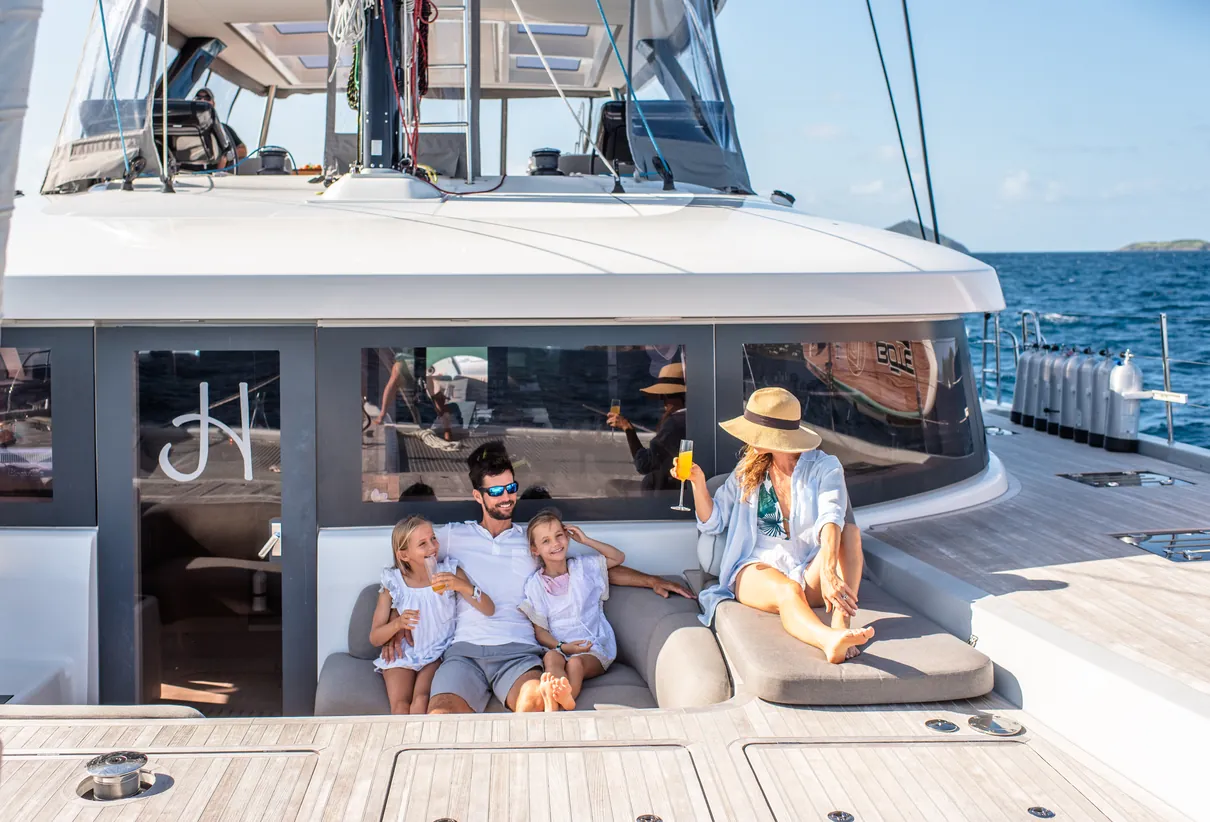
Sharing a 4-cabin or 5-cabin catamaran between two friendly families is one of our most popular charter options. Versatile cabin layouts, such as flexible configurations with convertible twin beds for children, ensure everyone is comfortably accommodated.
Splitting the investment allows both families to step up to a Premier or Luxury Tier sailing or power catamaran while doubling onboard amenities, living space, and shared family-friendly experiences compared to renting separate villas. To browse kid-friendly setups and some of our favorites, visit our BVI Family Yacht Charters page.
Real-World Sample Budget Scenarios
Here is the real-world math showing standard rates, crew gratuities, travel options, and group dynamics across our three fleet tiers:
Scenario 1: Boutique Tier – Island Hoppin’ 55 (Couples Cost-Sharing)
55′ Sailing Catamaran featuring 4 equal Queen en suite staterooms.
Option A: 3 Couples (6 Guests across 3 Staterooms)
- Base Charter Fee (All-Inclusive, 6 guests): $39,000 ($13,000 base per couple)
- Crew Gratuity (20% Benchmark): $7,800
- Mainline Airfare to STT ($650/person): $3,900
- Commercial Ferry Transfers ($150/person all-in): $900
- Trip Insurance (~6%): $2,340
Estimated Total Vacation Investment: $53,940 (~$17,980 per couple / ~$8,990 per person)
Option B: 4 Couples (8 Guests across 4 Queen Staterooms)
- Base Charter Fee (All-Inclusive, 8 guests): $40,000 ($10,000 base per couple)
- Crew Gratuity (20% Benchmark): $8,000
- Mainline Airfare to STT ($650/person): $5,200
- Commercial Ferry Transfers ($150/person all-in): $1,200
- Trip Insurance (~6%): $2,400
Estimated Total Vacation Investment: $56,800 (~$14,200 per couple / ~$7,100 per person)
Key Takeaway: Adding a 4th couple drops the cost per couple from $17,980 to $14,200—saving nearly $3,780 per couple while unlocking a luxury 55-foot catamaran.
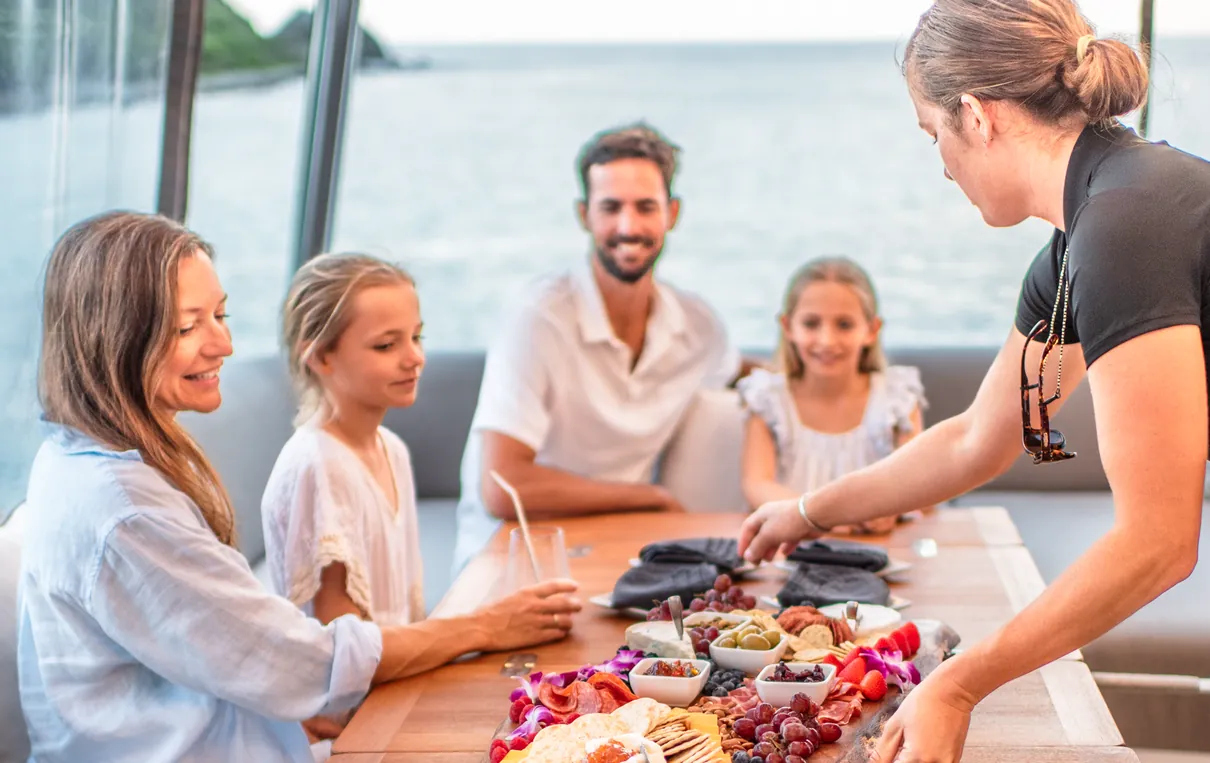
Scenario 2: Premier Tier – Grace 60 (Family Upgrade)
60′ Sailing Catamaran featuring a master suite, two Queen cabins, and a flexible twin cabin.
Option A: Single Family (4 Guests)
- Base Charter Fee (All-Inclusive, 4 guests): $53,000
- Crew Gratuity (20% Benchmark): $10,600
- Direct Non-Stop Airfare to Tortola (EIS) ($1,100/person): $4,400
- Trip Insurance (~6%): $3,180
Estimated Total Vacation Investment: $71,180 (~$17,795 per person all-in)
Option B: Two-Family Group (8 Guests across 4 Cabins)
- Base Charter Fee (All-Inclusive, 8 guests): $55,000 ($27,500 base per family)
- Crew Gratuity (20% Benchmark): $11,000
- Direct Non-Stop Airfare to Tortola (EIS) ($1,100/person): $8,800
- Trip Insurance (~6%): $3,300
Estimated Total Vacation Investment: $78,100 (~$39,050 per family / ~$9,763 per person)
Key Takeaway: Bringing a second family slightly increases the total base rate but cuts the per-family cost down to $39,050, letting two families enjoy a 60-foot Premier yacht with a master suite and onboard diving on a Boutique budget.
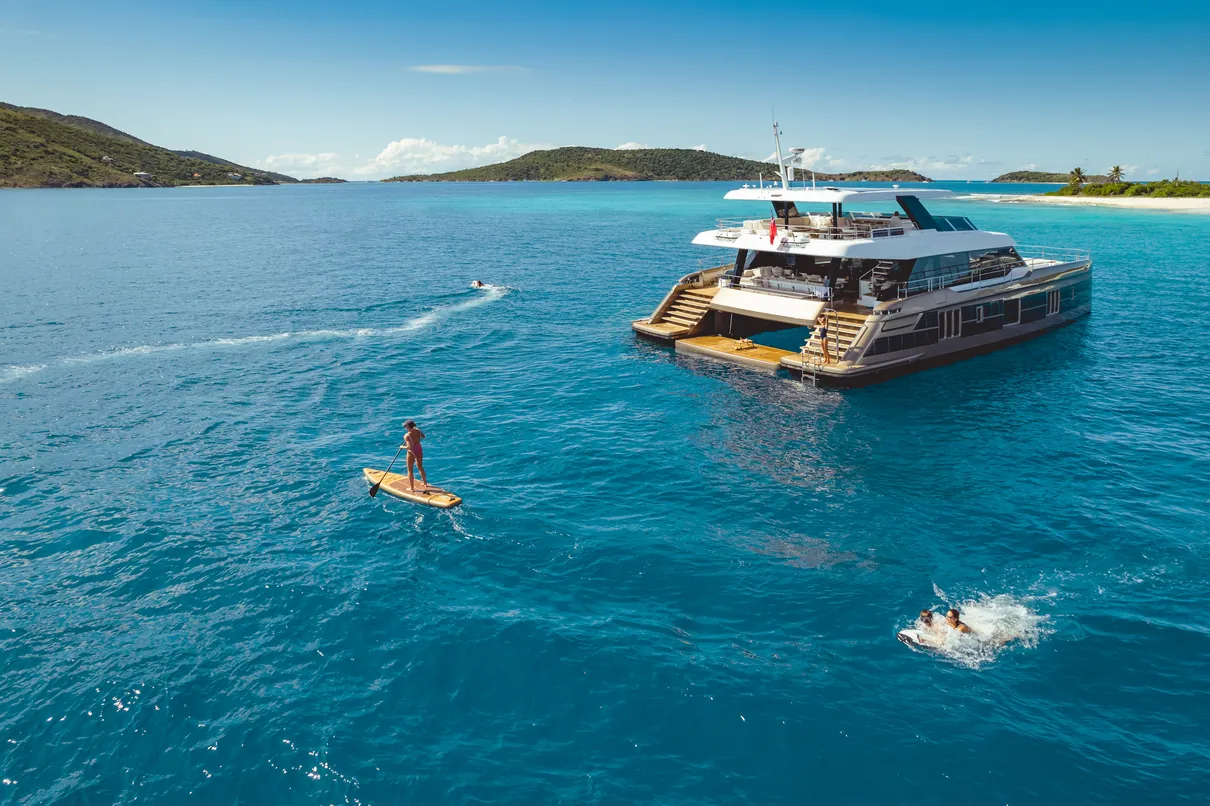
Scenario 3: Luxury Tier – Sól 80 (Transit Logistics)
80′ Flagship Power Catamaran for up to 8 guests in 4 deluxe staterooms.
Option A: Flights to St. Thomas (STT) + Private Water Taxi Arrival (8 Guests / 4 Couples)
- Base Charter Fee (All-Inclusive, 8 guests): $106,000 ($26,500 base per couple)
- Crew Gratuity (20% Benchmark): $21,200
- Mainline First-Class Airfare to STT ($1,500/person): $12,000
- Private Water Taxi Round-Trip ($500/person all-in): $4,000
- Trip Insurance (~6%): $6,360
Estimated Total Vacation Investment: $149,560 (~$37,390 per couple / ~$18,695 per person)
Option B: Direct Flights to Tortola / Beef Island (EIS) (8 Guests / 4 Couples)
- Base Charter Fee (All-Inclusive, 8 guests): $106,000 ($26,500 base per couple)
- Crew Gratuity (20% Benchmark): $21,200
- Direct Airfare to EIS ($1,100/person): $8,800
- Trip Insurance (~6%): $6,360
Estimated Total Vacation Investment: $142,360 (~$35,590 per couple / ~$17,795 per person)
Key Takeaway: Flying into St. Thomas paired with a private water taxi provides first-class mainline airfare availability and VIP door-to-door transit while remaining virtually equal in cost to direct commercial flights into Tortola. Additionally, if clients are flying private, depending on the size of their jet, they may be forced to use STT rather than EIS.
While upfront base rates vary significantly across these tiers, making strategic decisions around group size and transit logistics enables clients to tailor both the overall level of luxury and total budget to their exact preferences.
Conclusion: Crafting Your Perfect BVI Charter Vacation
Navigating the costs of a private crewed yacht charter doesn’t have to be overwhelming. By understanding the six core financial pillars—base charter rates, customary crew gratuities, travel logistics, destination taxes, on-island incidentals, and trip protection—you can plan your BVI vacation with total confidence and zero budget surprises.
Whether you are organizing an intimate family escape, sharing a premier or luxury catamaran between two families, or gathering close friends for a milestone celebration, Carefree Yacht Charters is here to match your group with the perfect yacht, crew, and itinerary.
Ready to start planning your BVI crewed catamaran charter?
Review published weekly rate tables on our BVI & Caribbean Yacht Charter Costs Guide, explore our curated fleet across our Boutique, Premier, and Luxury Tiers, or Contact Joe and Lynne today to receive personalized yacht recommendations and tailored pricing for your exact dates.